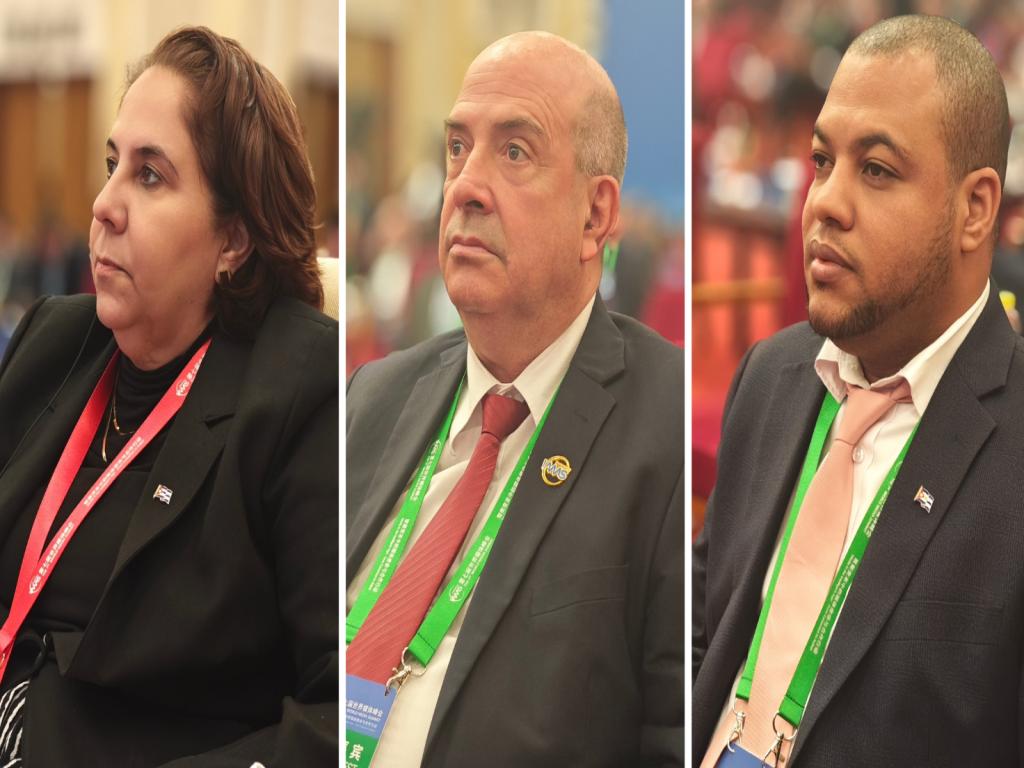
Representatives from Cuba argued at the 7th World Media Summit for the need to ensure equitable access to artificial intelligence (AI) and to prevent technological gaps from deepening inequalities between nations.
The Cuban delegation is led by Liudmila Álamo Dueñas, Deputy Head of the Ideological Department of the Central Committee of the Communist Party of Cuba (PCC), accompanied by executives from the island’s media outlets.
Alejandro Gómez, Vice President of Prensa Latina, noted that the summit provides an opportunity to analyze the challenges posed by AI amidst the current technological revolution, while ensuring that the Global South is represented in the debate.
He emphasized the importance of preventing the further widening of technological gaps and promoting an approach to AI development that brings societies closer together and places human beings at the center.
Gómez underscored the necessity of supporting nations in the Global South with infrastructure, training, and technological tools to help them move toward digital sovereignty.
For Cuban journalists, he added, the summit offers a chance to gain firsthand insight into the rapid evolution of these technologies and to identify potential areas for cooperation with media organizations from other countries—most notably China.
Furthermore, he stated that such exchanges are essential given an international landscape currently defined by disinformation, “fake news,” and the distortion of the truth.
Randy Alonso, Director of *Ideas Multimedios*, described the summit — held on the 95th anniversary of the founding of the Chinese news agency Xinhua — as highly significant, and highlighted the relevance of discussing the role of AI in contemporary journalism. Randy Alonso expressed the view that this technology cannot replace human emotions or the role of a journalist, although it can contribute to content generation, analysis, and the verification of data and facts.
He also advocated for equitable access to AI, ensuring it is not limited to wealthy nations or the owners of major media outlets.
For his part, Yuniel Labacena, director of the newspaper *Juventud Rebelde*, highlighted the significance of the event for Cuban media, which are currently undergoing editorial, technological, and economic transformations.
He noted that the use of AI could help attract adolescent and young audiences, but insisted that its integration must preserve essential principles such as creativity, objectivity, and human oversight of content.
Labacena pointed out that exchanges among media outlets from the Global South allow for the sharing of experiences, the establishment of professional ties, and the discovery of new tools to transform operational routines.
José C. Zaragoza, director of Cuban Television, emphasized that participating in the gathering creates opportunities to form alliances and strengthen cooperation with other media organizations.
While acknowledging that AI can enhance efficiency and productivity, Zaragoza warned of the risk that it could also be used as a tool for the manipulation of information.
Consequently, he stressed the need to harness the potential of AI without abandoning the practices of critical oversight, data verification, and the dissemination of truthful, objective information.
The 7th World Media Summit has brought together approximately 500 representatives from around 330 media organizations, think tanks, and institutions across 112 countries in Beijing, with discussions focused on the transformation of communication and the challenges posed by artificial intelligence.
[ SOURCE: PRENSA LATINA ]