By Alejandra Rosa García Elizalde
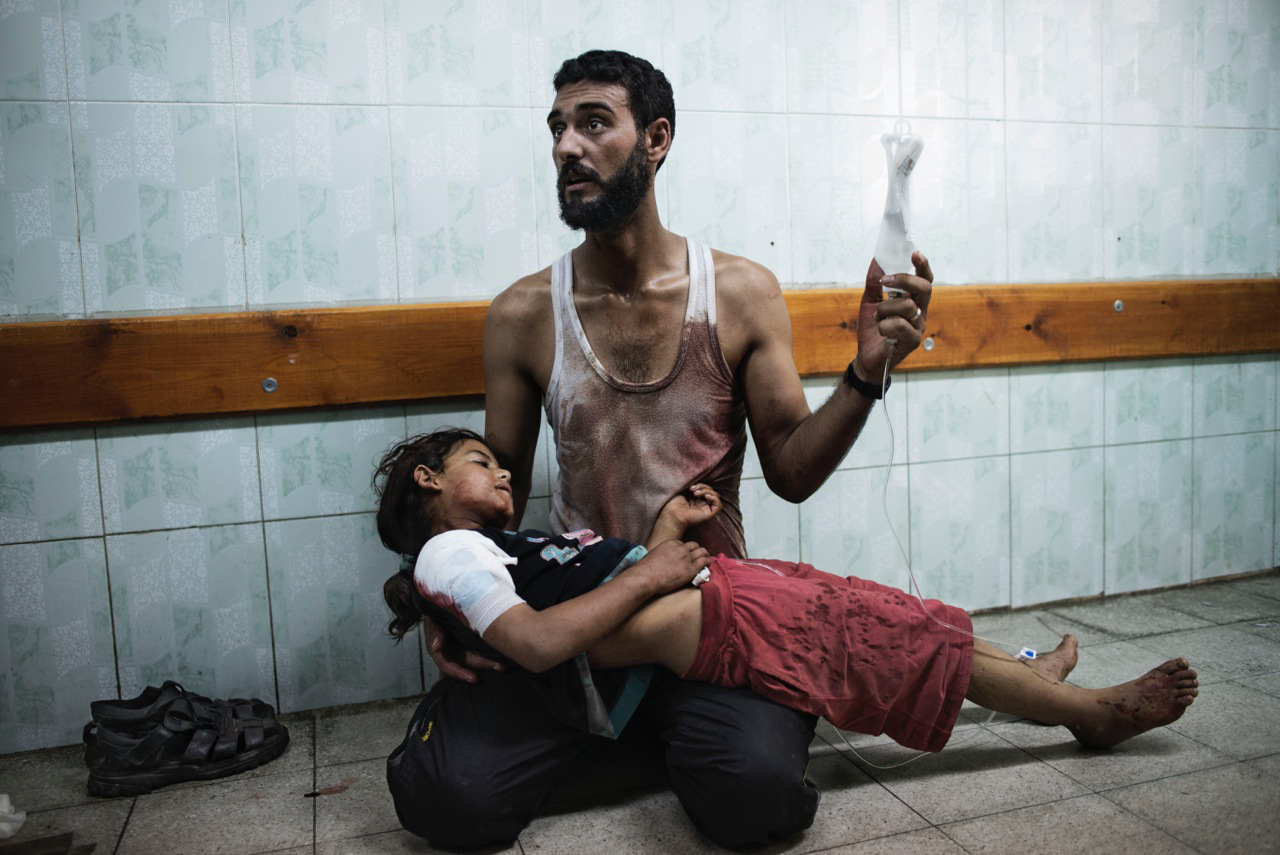
In Gaza, thousands of children have been killed amid the genocide that’s being imposed by Israel with total impunity. In Cuba, millions of people have survived for years amid blackouts, shortages, difficulties accessing medicines, fuel scarcity, and a profound economic crisis imposed upon them by the United States.
These are different realities, but there is a question that connects them and should challenge the conscience of the international community: How much civilian suffering is the world willing to tolerate before taking action? It is an important question as the 81st session of the United Nations General Assembly approaches.
In Cuba, the government denounces that U.S. sanctions and restrictions are worsening an already critical situation.
When fuel is scarce, the crisis ceases to be an abstraction. It enters people’s homes. It enters the room where a child tries to do homework during a blackout. It enters the home where a mother fans her baby because the heat becomes unbearable.
It also enters the kitchen, where food begins to spoil; the hospital, where a patient needs medicine that does not arrive; and the life of a worker who does not know how they will get to work because public transportation is nearly paralyzed.
An Island in the Dark
In mid-September, Cuban Foreign Minister Bruno Rodríguez Parrilla presented a report on the damage caused by the U.S. blockade between March 2025 and February 2026.
Rodríguez described months in which many families have lived with barely two or three hours of electricity a day, or even less.
Behind those hours of blackouts lies much more than an energy statistic: there is a child whose sleep is interrupted, a grandfather left without television or radio, a student trying to concentrate without light, and a mother struggling to find a way to preserve food.
Blackouts disrupt the entire life of a family. The Cuban government maintains that the lack of fuel is one of the main factors behind the energy crisis and denounces that U.S. measures make it difficult to obtain the fuel and diesel needed for electricity generation.
It also points out that the restrictions affect the acquisition of parts and equipment for thermoelectric power plants and hinder the expansion of renewable energy sources such as solar power.
When a Sanction Reaches a Hospital Bed
One of the most painful dimensions of any sanctions policy is the one that does not immediately appear in the headlines: the way it ultimately affects a patient.
Rodríguez stated that thousands of containers have been prevented from reaching Cuba because of the pressure and threats faced by shipping companies. The figure cited by the foreign minister exceeds 7,000 containers.
To someone observing the situation from afar, a container may simply be a shipping unit.
For a family, it may contain medicine. For a hospital, it may mean essential supplies. For a patient, it may represent the difference between receiving treatment on time and continuing to wait. And when that patient is a child, that wait can become unbearable.
“They Are Children, Not Numbers”
Referring to the increase in infant mortality between 2018 and 2025, the Cuban foreign minister made a statement that should transcend any political debate: “They are children, not numbers.”
The statement matters because behind every mortality statistic there is a life that ended and a family that will carry that loss forever.
The tragedy in Gaza and the Cuban crisis belong to different historical and political contexts; but they converge at their roots in a history of struggle and resistance against the imperial thirst of powerful nations.
The international community has condemned, debated, and voted for years on the U.S. blockade against Cuba. At the same time, the great powers have repeatedly demonstrated that their international decisions are shaped by political, economic, and strategic interests. And the same happens with the Palestinian cause and their constant outcry for their international recognition as a sovereign state.
Meanwhile, families continue to live with the consequences. Both in Gaza and Cuba, a child dies everyday day due to bombs or invisible sanctions. May the deaths of those children never become something to which we grow indifferent to.
IMAGE CREDIT: GAZA / INTERNET