By Alejandra Garcia
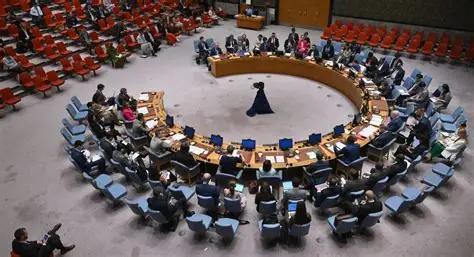
On Tuesday, May 26th, the United Nations Security Council convened a high-level open session under the chairmanship of China, where Cuban Foreign Minister Bruno Rodriguez delivered a firm address reaffirming Cuba’s commitment to peace while warning that the island stands ready to defend its sovereignty against escalating pressure and hostile measures from the United States.
Addressing the international community, Rodriguez stressed that Cuba poses no threat to the United States or any other nation. He argued that Washington has continued to intensify its hostile policies toward the island through sanctions, diplomatic pressure, and unjustified accusations against Cuban leaders.
The Cuban foreign minister denounced recent actions by the U.S. government targeting Army General Raul Castro, describing the measures as politically motivated and based on actions taken in defense of Cuba’s national sovereignty. According to Rodriguez, such accusations are part of a broader pattern of aggression aimed at undermining the Cuban government.
Despite the growing tensions and threats of military attacks, Cuba reiterated before the United Nations its willingness to continue diplomatic dialogue with the United States, and reassured the Cuban people’s right to self-determination.
“Despite the lack of progress, goodwill, and seriousness on behalf of the United States, we remain willing to continue talks and to address bilateral issues without interference in our internal affairs, political system, or decisions,” Rodriguez stated. He also called for “civilized behavior and multifaceted cooperation” on issues including terrorism, drug trafficking, transnational organized crime, migration, and human trafficking.
The foreign minister strongly criticized the long-standing economic blockade against Cuba, arguing that no justification exists for the U.S. to maintain aggressive and coercive measures that entail severe humanitarian consequences for the Island. For more than six decades Washington has attempted to portray Cuba as a threat to U.S. national security despite the island’s small size and limited military capacity.
Quoting Cuban President Miguel Diaz-Canel, Rodriguez emphasized that “Cuba is not and cannot be a threat. It is not an enemy of the United States and does not seek to be one, despite its significant differences with the U.S. government.”
From March 2024 to February 2025, the blockade caused estimated material losses of $7.5561 billion, representing a 49% increase compared to the previous period. This rise is mainly attributed to declining export revenues and financial persecution that hampers international transactions.
According to Cuban officials, the tightening of U.S. policy has increasingly relied on executive measures expanding the scope of the economic blockade, including secondary sanctions with extraterritorial reach. Havana argues that these sanctions seek to penalize foreign companies and institutions that maintain economic or financial relations with Cuba, violating principles of international law by extending U.S. jurisdiction beyond its borders.