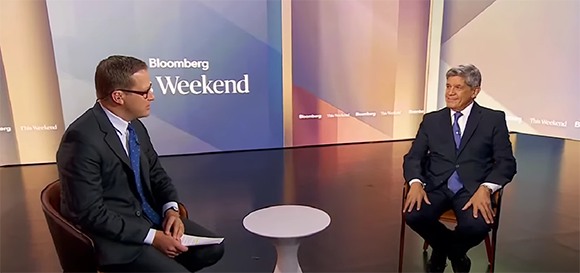
Cuban Deputy Foreign Minister Carlos Fernández de Cossío confirmed to a Bloomberg podcast that Cuba and the United States maintain lines of communication and have held meetings, though he stated that Havana sees no progress as long as Washington continues to impose new sanctions.
“We continue to communicate and are willing to meet. We have met from time to time,” he stated. He explained that both sides have agreed to keep these contacts discreet.
However, he drew a distinction between holding talks and achieving results: “We don’t see progress,” he said, arguing that as long as the United States continues to implement “new measures, new pressures, and new sanctions,” it is difficult to speak of advances.
Sovereignty and relations with Washington
Fernández de Cossío rejected U.S. statements regarding political change in Cuba and defended the country’s right to determine its own political system.
His response was direct: “Cuba is not calling for regime change in the United States.”
Despite their differences, he listed areas where he believes bilateral cooperation is possible: the fight against drug trafficking, terrorism, and organized crime, as well as scientific research and academic exchanges.
He also delivered a clear message: Cuba is open to greater U.S. business involvement.
“We welcome U.S. business in Cuba,” he stated.
According to the deputy minister, the problem would not be a greater U.S. economic presence, but rather if that relationship entailed excluding other international partners.
“We want to engage with the whole world, not just one country, not just one nation,” he noted. Fernández de Cossío further maintained that Cuba does not want to depend on or be dominated by any power: “We do not want to be dominated by any other country.”
Two or three hours of electricity a day
One of the most striking moments of the interview came when he described the living conditions caused by the energy crisis.
According to Fernández de Cossío, for the past eight or nine months, the Cuban population has lived with approximately three hours of electricity a day—and sometimes barely two.
The interviewer asked if this reality affected him personally as well.
“Of course,” he replied.
He recounted that while he was away from Cuba, he would speak with his wife daily to find out when the power had come on. On one occasion, it was between noon and 3:00 p.m.; on another day, between 3:00 a.m. and 6:00 a.m.
“What do you do when the electricity comes on from 3:00 a.m. to 6:00 a.m.?” he asked.
He even recounted that during some summer days, they had five or six hours of electrical service: “We didn’t know what to do with it because we aren’t used to it.”
The prolonged lack of electricity, he explained, has even reduced the usefulness of refrigerators because it is impossible to properly preserve food.
“I leave the house without electricity. I return without electricity. I leave the house without running water. I return without running water,” he described.
And he summed up the gravity of the situation with another phrase: “We are going back to the beginning of the 20th century.”
Sanctions
Fernández de Cossío stated that Washington has managed to intimidate countries and companies into preventing them from supplying fuel and other products to Cuba.
When asked if these difficulties are causing discontent among the population, he openly acknowledged that they are.
“People are upset. People are irritated,” he stated.
Economic reforms: “We are trying to change”
Fernández de Cossío linked that very discontent to the need to transform the economy.
“We are trying to be innovative, to change,” he declared. He explained that Cuba is attempting to venture into economic areas where it lacks prior experience, seeking solutions amidst a situation he described as uncertain.
He also acknowledged that there is no guarantee of success: “We are hopeful. It is not clear whether we will be able to do it.”
The deputy foreign minister asserted that maintaining U.S. pressure would significantly hinder those reforms.
But he also outlined the opposite scenario:
“If the United States reduces the level of pressure, then those transformations in Cuba could go very far and truly become irreversible—which is our goal.”
This statement positions internal economic transformations as a central element of his message: the Cuban government seeks change but maintains that sanctions limit the possibilities for carrying it out.
Could the crisis end at the negotiating table?
The interview concluded with a direct question: could the current standoff between Cuba and the United States be resolved through negotiation?
Fernández de Cossío replied: “We would welcome that.”
He clarified that he could not predict the U.S. government’s stance, but maintained that Cuba would be willing to accept the outcome of a genuine negotiation, even if it fell far short of all its aspirations.
“That is what negotiation is,” he stated.
He spoke from his diplomatic experience: “I worked for many years at the United Nations and have participated in other negotiations with the United States. That is how negotiations end.”
IMAGE CREDIT: Bloomberg screenshot
[ SOURCE: CUBA DEBATE ]