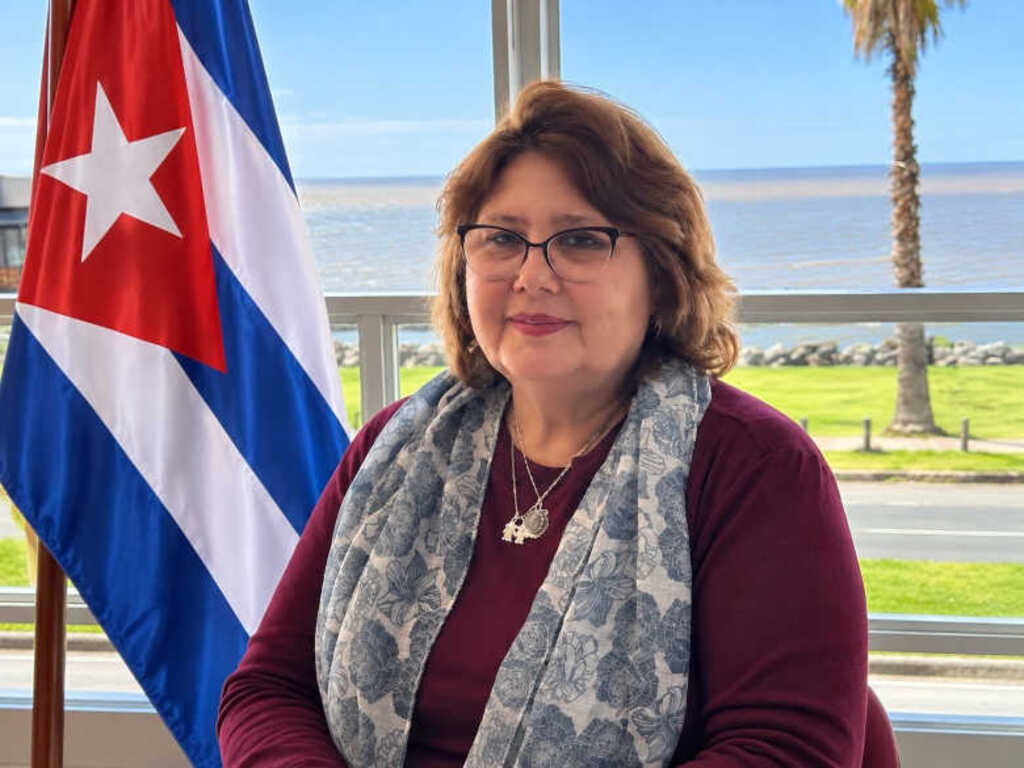
The vote at the United Nations rejecting the blockade of Cuba serves as an overwhelming message in defense of international law and multilateralism, stated Lissett Pérez, Cuba’s ambassador to Uruguay.
“The most important aspect of the UN vote is the overwhelming support from the international community for Cuba,” she told the newspaper *Diario La R*.
She maintained that the backing of 130 countries took place against a backdrop of intense pressure exerted by Washington, alongside a media manipulation campaign aimed at blaming the Cuban government for the economic and social hardships the country is facing.
“This occurred amidst the most brutal pressures—including personal phone calls from Marco Rubio [Secretary of State] to every president and prime minister in the Caribbean,” she asserted.
The diplomat noted that the vote should also be interpreted as a defense of the rules that govern international relations. In this regard, she highlighted the statements made by countries speaking on behalf of regional groups and organizations.
Specifically, she acknowledged Uruguay’s intervention during the debate, delivered on behalf of the Group of 77 plus China—a group for which the South American nation currently holds the *pro tempore* presidency.
“In that capacity, they spoke and captured the sentiments of the G77 group,” she explained.
The ambassador also recalled that President Yamandú Orsi had included a reference to the rejection of the blockade during his address to the UN General Assembly’s general debate in September.
According to her, 43 other countries also addressed the issue during that session.
For Pérez, the persistence of such statements demonstrates that the matter remains a significant presence on the international agenda, regardless of political differences between governments.
“There is an economic and multidimensional war being waged against Cuba,” the diplomat declared. She explained that U.S. prohibitions are not limited to bilateral trade; rather, they extend to banks, shipping companies, businesses in third countries, tour operators, and individuals who maintain ties with the island.
“What they want is to disconnect Cuba—not just from the economy, as they have been doing, but also from solidarity, and from the international message that this policy is rejected,” she remarked.
She also pointed to the extraterritorial consequences of the blockade, which affect various countries and entities. “This is not a bilateral issue; it is an issue that concerns everyone,” she noted.
She emphasized that the inclusion of her country on the U.S. list of state sponsors of terrorism exacerbates the difficulties of operating within the international banking system.
“We are practically already outside the banking system,” she stated.
Pérez pointed out that the U.S. measures also affect private Cuban enterprises that had managed to establish commercial or financial links with foreign companies.
This situation limits the ability to import supplies, access suppliers, and sustain commercial operations. She added that it also creates difficulties in securing maritime transport services and finalizing purchases from abroad.
All of this is intended to subject the Cuban people to all manner of deprivations and to provoke social unrest on the island, she warned.
“Cuba poses no threat to anyone’s national security,” the ambassador declared, refuting Washington’s justification for intensifying the siege on its small, neighboring country to an unprecedented degree.
[ SOURCE: PRENSA LATINA ]