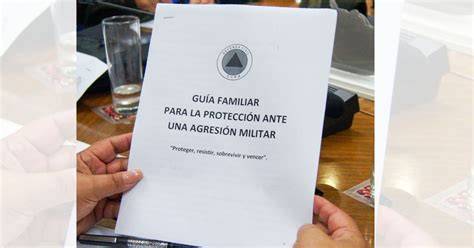
The National Civil Defense General Staff of Cuba released the Family Guide for Protection Against Military Aggression, published on its official Facebook page, as part of Exercise Meteoro 2026 and in the context of the fortieth anniversary of this national exercise.
The text, subtitled “Protect, Resist, Survive and Win,” aims to guide the population on basic security measures in the event of an exceptional situation of military aggression, with an emphasis on the protection of vulnerable groups such as children, pregnant women, the elderly and people with disabilities.
The document’s introduction recalls the historical threats suffered by Cuba since the triumph of the Revolution, including covert operations, financing of banditry, mercenary landings, terrorism, assassination attempts against leaders, and economic strangulation.
It states that, in the event of a military attack, Civil Defense’s primary mission is to protect lives during times of war and disaster.
The guide emphasizes that a large segment of the population will not participate in combat due to age or physical condition, making it essential to know basic protective measures.
With the same rigor applied to preparing for natural disasters, citizens are urged to prepare to safeguard their lives in the event of a military attack.
Among the key recommendations, it is advised that each family develop a set of measures to protect its members, belongings, and household finances, stay informed through local defense councils, and diligently follow the guidelines of territorial authorities.
It is also recommended to know the designated safe area in case of air attacks and to prepare a bag or backpack with essential supplies.
The contents of that bag include identification documents, a radio with backup power, lighting supplies, three days’ worth of ready-to-eat food, drinking water, hygiene items, medications for chronic illnesses, and, for young children, suitable toys to keep them entertained.
Regarding safety protocols, it is essential to know the warning signs of an air attack, to go to basements, tunnels or safe trenches, to avoid lingering in open spaces, not to touch suspicious objects, and not to take refuge in damaged buildings, under bridges, or in gas stations.
It is recommended not to use elevators during attack alarms and to maintain discipline and solidarity in the bomb shelters.
The document also details the contents of a first-aid kit, which should include drinking water, pain relievers, antihistamines, disposable gloves, antiseptics, gauze, bandages, adhesive tape, scissors, tweezers, a thermometer, burn ointment, face masks and bandages.
Regarding first aid actions, the guidelines emphasize self-control in order to provide assistance, attend to bleeding, fractures and burns, and avoid crowding around injured people.
In case of fractures, do not move the affected limb or apply ointments; if the bone is exposed, do not place any substances on it.
For bleeding, it is recommended to apply pressure with a clean cloth and apply tourniquets to arms or legs, noting the application time.
For open wounds, it is advised to wash with plenty of clean water, not to apply antiseptic solutions, avoid removing embedded objects, and bandage with the cleanest materials possible.
Civil Defense emphasized that these measures aim to minimize risks and guarantee the survival of the population in exceptional situations.
[ SOURCE: www.cubainformacion.tv / AGENCIA CUBANA DE NOTICIAS (ACN) ]