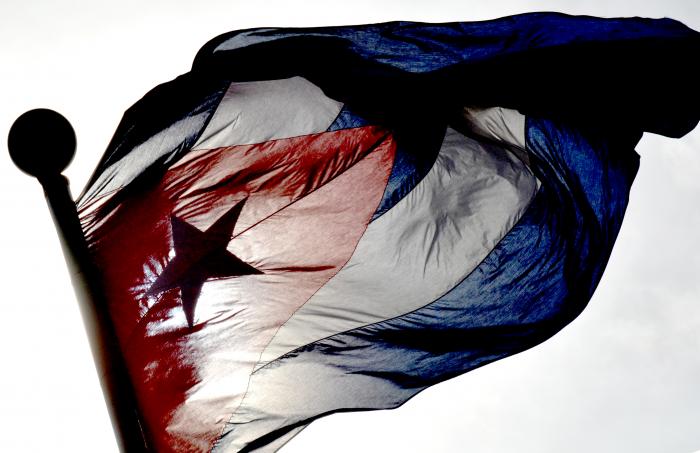
The First Secretary of the Central Committee of the Party and President of the Republic, Miguel Díaz-Canel Bermúdez, recalled today on his Twitter account that May 20, 1902, represents intervention, interference, dispossession, and frustration for Cuba because it did not bring true independence, but rather the imposition of the Platt Amendment, U.S. control, and the birth of a tutelary republic.
“There is only one thing to be grateful for on that day: having instilled in Cubans of that time an anti-imperialist sentiment that each subsequent generation has felt deepen with new and constant threats to the independence and sovereignty of the Homeland,” the Cuban president emphasized.
“Here is another May 20th to prove it, in which the paid agents of dishonor are clamoring for the return of the tutelary republic. Let us not underestimate them, but never forget that, thanks to the empire itself, we anti-imperialists are far more numerous.”
On May 20, 1902, on the largest island of the Antilles, after three years of U.S. military occupation, the Republic of Cuba was formally established under the Platt Amendment — imposed by Washington in 1901 — which legalized the United States’ right to intervene on the island and the perpetual occupation of territory for naval bases. That date did not seal independence, but rather enshrined a tutelary republic and paved the way for decades of political domination, economic plunder, and national frustration.
IMAGE CREDIT: Photo: Ricardo López Hevia
Author: Digital Editorial Staff | internet@granma.cu
[ SOURCE: GRANMA ]