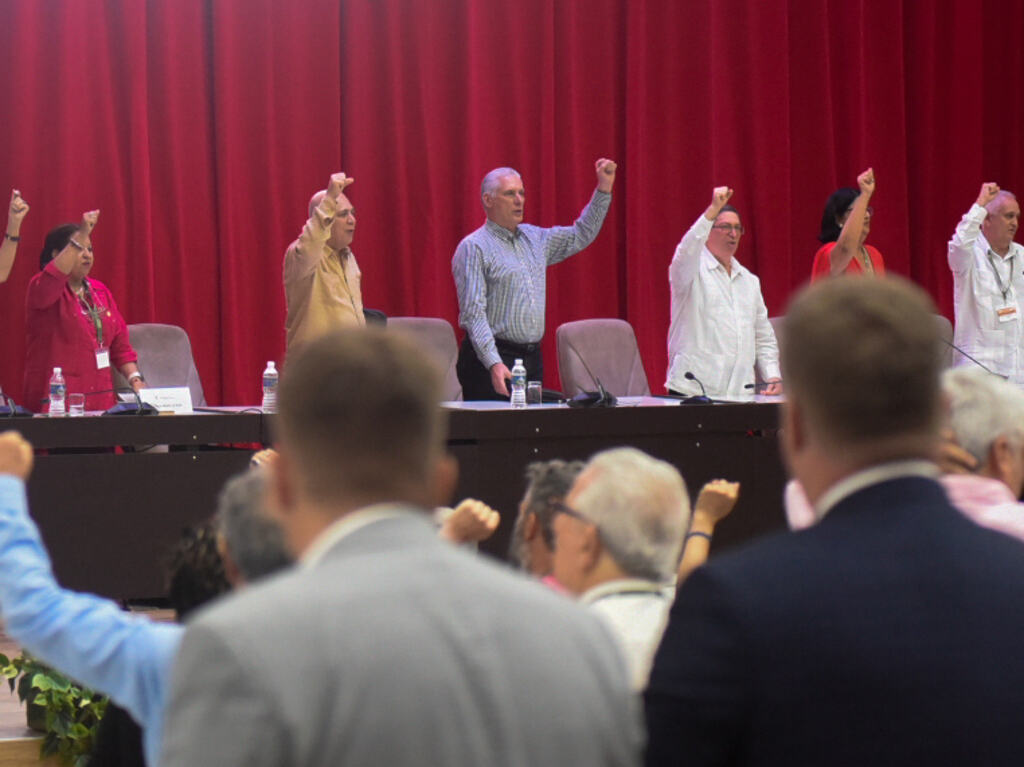
Cuban President Miguel Díaz-Canel attended the Solidarity Forum on Wednesday with representatives from several countries, as part of the 1st International Colloquium “Fidel: Legacy and Future.”
During the event, the Vice President of the Cuban Institute of Friendship with the Peoples (ICAP), Noemí Rabaza, called for strengthening international solidarity with the island in the face of the tightening of the U.S. blockade.
In her remarks, Rabaza emphasized that Cuba’s commitment to solidarity is a founding value of the nation, born and strengthened in the struggles for independence in Latin America and the Caribbean.
“Fidel (Castro) considered that being internationalist is paying our own debt to humanity.”
The Vice President of ICAP recalled that the historic leader understood from a very early age that the liberation of Cuba was not an isolated project and that the dignity of the nation was inextricably linked to the dignity of all the peoples of the world.
“Solidarity is the most powerful moral weapon we have against injustice.”
Before delegates from approximately 63 countries, Rabaza denounced the impact of the U.S. blockade on the daily lives of Cubans.
“The silent genocide waged against Cuba causes immeasurable damage and terrible limitations. The infant mortality rate has climbed from 4.0 to 9.9 per 1,000 live births, demonstrating that Cuba is experiencing a war without bombs.”
The ICAP leader called on solidarity movements to undertake four strategic tasks outlined by President Díaz-Canel: disseminating the truth about Cuba, building effective networks, strengthening solidarity with new sectors, and promoting solidarity-based cooperation.
“Cuba is not a threat. We are a noble people who save lives where others destroy, who send doctors and teachers where others send bombs.”
The vice president of ICAP concluded her remarks with a message of resilience: “Cuba continues to resist, heroically and creatively, in the face of all this these challenges.”
[ SOURCE: PRENSA LATINA ]